
EP 220: Genetic Yield Gain, Marker-Assisted Breeding, & Best Dogs
January 15, 2026
EP 221: Farmer Bridge Payment, Grain Handling Hazards, & Vacations
January 28, 2026
Seed decisions are getting more complex as our world ages and our knowledge increases. As top corn and soybean genetics continue to perform almost equally, the real separation is happening beyond the bag. Management, placement, and timing are now the levers that consistently move yield and ROI.
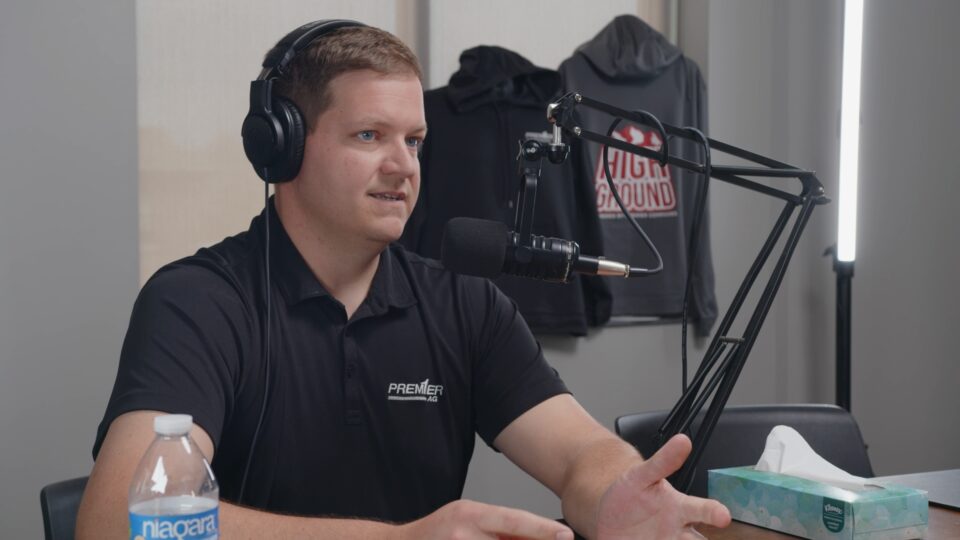
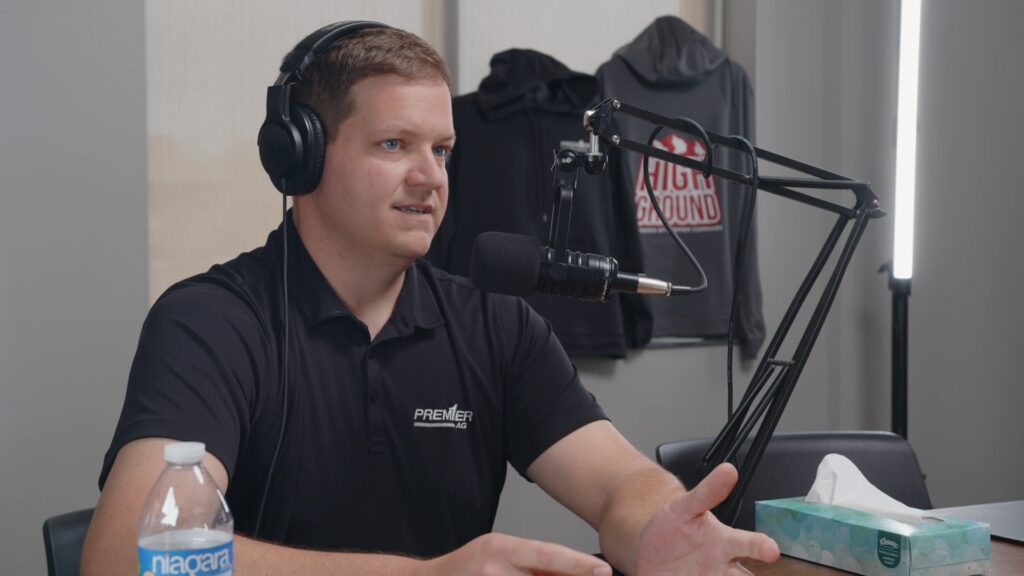
In this conversation, Premier Agronomist Glenn Longabaugh digs into what the latest data from WinField United is really telling us about genetic advancement, how growers should rethink risk and adoption, and where small, early decisions quietly stack the odds in your favor across the season. If you are looking for clarity in a crowded seed and input landscape, this perspective cuts through the noise.
Premier: One of the big takeaways in this report is that genetic performance among leading corn and soybean brands is largely comparable. From your perspective, how should growers rethink seed decisions knowing that management practices may now play a bigger role than brand selection alone?
Glenn: Great question! I will probably answer this in two parts.
1A) I would agree that the performance of the lead products across brands is almost at parity, However, that really doesn’t tell the entire story when you consider the depth of the bench in a given maturity. For example: some brands have a single product that performs well in 115-120 days while other brands have as many as four or five products in that top tier performance group.
Knowing that supply is always a problem across the best performers, some brands are much more likely to accommodate growers with the highest performing offerings.
1B) Having multiple brands at performance peak really shouts Opportunity! If a grower has a deep bench of top performers to call onto the field then they have the opportunity to fine tune placement and get the best products in the right position.
You can have a bench full of all stars but if you put a catcher in the outfield or a first baseman on the mound you may not be heading for a championship season. Growers that want better placement can use the Answer Plot RT (Response To) scores to really manage those top products to a higher level
Premier: The data shows newer corn genetics delivering consistent yield gains over previous hybrid classes without additional inputs. What does this tell you about the pace of genetic advancement, and how should growers balance adopting new genetics while managing risk on their acres?
Glenn: Knowing the history of corn performance through the eras from open pollinated, to double cross, to single cross to the era of biotech and marker assisted breeding, honestly, I would have guessed that by now the trend or slope of genetic gain would have started flattening out…and yet it’s not!
In fact the slope is increasing which suggests that its imperative growers adapt to new hybrids even faster to stay in a competitive position.
Premier: Response-To scores highlight how dramatically hybrids can differ in their response to nitrogen and fungicide. How can growers practically use these Response-To insights to prioritize inputs and protect ROl, especially in a tighter margin environment?
Glenn: Again, it’s about opportunity and strategy. The opportunity is having the data to make better decisions. The strategy might be to use split N applications on the hybrids that have a high RTNitrogen score. Or, in contrast, you could use a low RTN hybrid on those fields that are un-handy to split apply! RTFungicide is similar. Having the data of which hybrids RTF is a great way to forecast where you would focus 2 pass or early applications vs where you might plan for a disease trip only!
Premier: Several trials in the report emphasize the value of precise timing, whether that’s early soybean planting, V10 nutrient applications, or late-season fungicides. If a grower had to focus on just one or two timing decisions that consistently move the yield needle, which would you prioritize and why?
Glenn: There are a few absolute critical timings in corn, but few are more important than getting the crop cleaned up early, like V1-V2 early. Why? Because weed pressure whether from broadleaves or grass will have a season long impact on that crop if not addressed early. By V4 the repercussions are irreversible.
Grand growth is another wonderful opportunity for growers because it allows them to address and influence multiple factors at one time. V8-V10 is a great timing to amend the crop with micronutrients like zinc, manganese and boron. In addition, it’s one of the best times to make a first pass of fungicide in a multi-pass program.
It’s important to point out that fungicides are well documented to have stress mitigation properties in addition to cleaning the plant up from unwanted fungal pathogens. Maybe best of all, a V10 fungicide also allows you to delay that traditional R1 fungicide pass into an R2.5-R3 pass effectively spanning grain fill giving you season long protection.
For Soybeans:
- Plant early
- Use full complement of seed treatments including newest bolt-ons like Saltro or Victrato
- Plant modest seed rates
- Control weeds with overlapping residuals realize you can’t stay clean if you don’t start clean!
- Manage nutrition, insects and diseases deeper into the season. More yield is won or lost post R3 than pre R3!
Premier: Across both corn and soybeans, the research repeatedly shows that small, early advantages often compound into measurable yield gains later in the season. In your experience working with Answer Plot data, what’s the most commonly overlooked early-season decision that ends up having the biggest downstream impact on yield?
Glenn: With corn there should be no debate: do everything you can to make a bigger, darker green, more robust plant and you will be rewarded. Corn doesn’t have to be pretty early to yield well, but within the same cropping system the best looking corn early always trends better than corn that struggles early. A prescription for good early corn? Let the ground warm up and dry adequately. Use starter fertilizer and include P, Zn, Ascend2 in a furrow and direct the N,S and B away from the seed and apply as 2X2, 2X2X2, 2X0, 2X2X0.
Download the Report
The takeaway is clear. Yield is no longer about finding a silver bullet product. It is about stacking smart decisions. From leveraging a deeper genetic bench and using Response-To data with intention, to prioritizing early-season execution and precise timing, today’s highest-performing acres are managed, not guessed.
The growers who win are the ones who treat data as a tool, not a report, and who are willing to adapt faster as genetics continue to accelerate. The opportunity is there. The advantage belongs to those who act on it.
Download WinField United’s 2025 Advanced Acre Insights Guide